“Concrete Canvas®,” which hardens with water, has been selected as a “Recommended Technology” in the Ministry of Land, Infrastructure, Transport and Tourism’s Reiwa 8 NETIS program (
).
~Accelerating Disaster Recovery and Reducing Labor Requirements: Expanding Use in Public Works Projects~
2026.05.26
Taiyo Kogyo Co., Ltd. (Tokyo Headquarters: Setagaya-ku, Tokyo;Osaka Headquarters: Yodogawa Ward, Osaka City; President: Yuki Nomura; hereinafter “Taiyo Kogyo”) is pleased to announce that “Concrete Canvas®,” a geosynthetic cement composite mat(GCCM) “Concrete Canvas®”—which forms concrete structures simply by adding water—has been selected as a “Recommended Technology” for Reiwa 8 by the Ministry of Land, Infrastructure, Transport and Tourism’s New Technology Information System (NETIS) in April 2026.
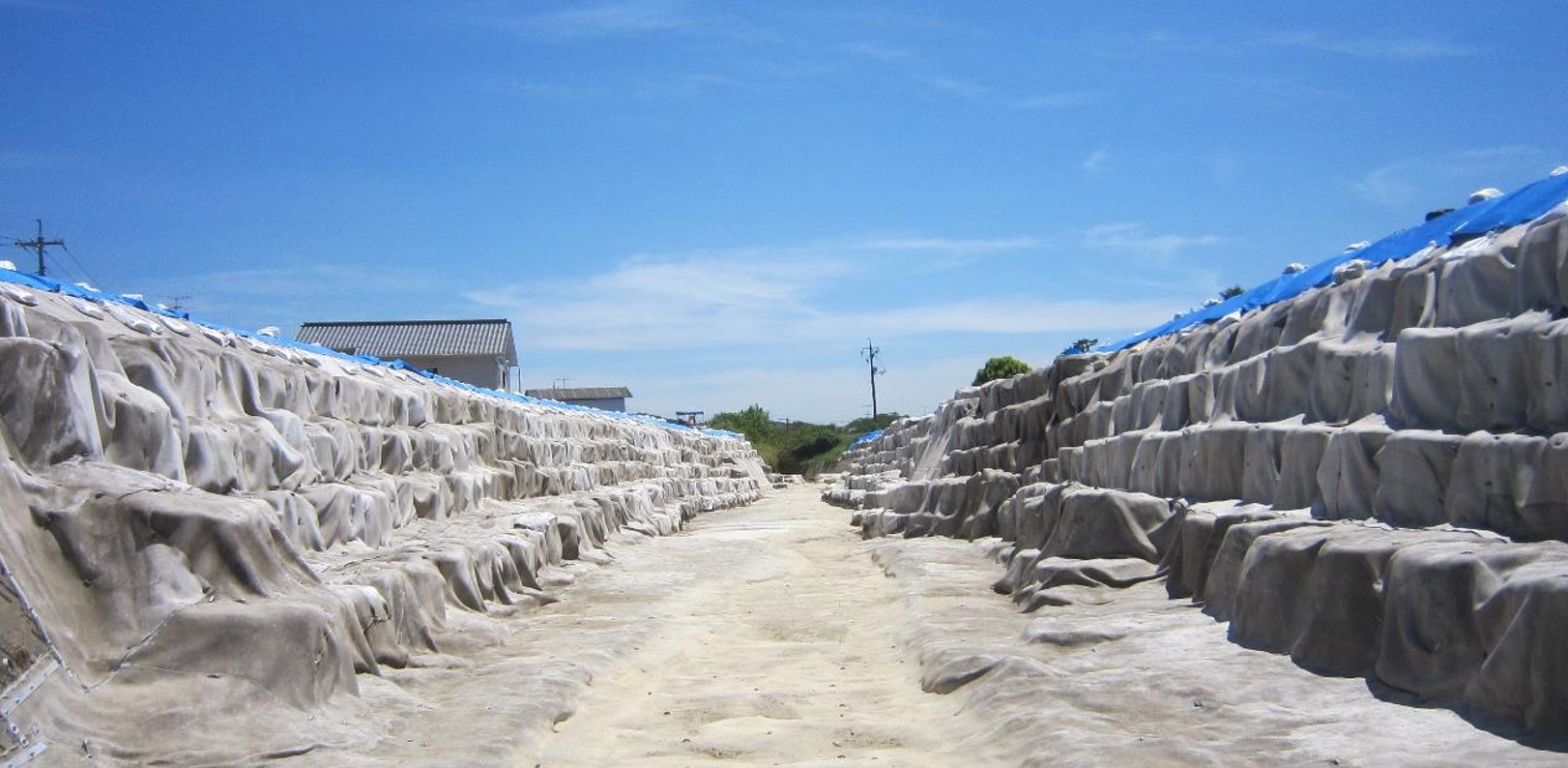
A case study of the restoration of the Suemasa River following the Heisei 30 Western Japan Heavy Rains. At a site where it was difficult to secure materials, equipment, and workers,
a temporary levee was covered with Concrete Canvas®, and approximately 4,500 square meters were temporarily restored in eight days.
Amid ongoing labor shortages and increasingly severe natural disasters, there is a growing need for more efficient construction and rapid recovery efforts; this technology is expected to contribute to solving these societal challenges.
This technology received “VE Certification (Technology with Proven Effectiveness)” in 2025, and with this latest selection, it has advanced from the demonstration phase to the adoption phase, where it is expected to be fully utilized in public works projects.
The Significance of Selecting “Recommended Technologies” and Key Evaluation Criteria
NETIS, operated by the Ministry of Land, Infrastructure, Transport and Tourism, is a database designed to promote the use of new technologies in public works projects. “Recommended Technologies” in NETIS are selected—following review by external experts—as technologies that are particularly innovative and useful, and for which active use in public works projects is encouraged.
Concrete Canvas® has been highly evaluated for the following points based on its track record in the field and verified effectiveness.
① Innovation in Construction (Labor Savings and Adaptability to Constraints)
This method does not require formwork or heavy machinery and can be used even under conditions where conventional methods are difficult to implement—such as in confined spaces, on steep slopes, or near water’s edge—thereby reducing the labor required and significantly streamlining the construction process.
② Performance Reliability (Thin Layer × Durability)
Although it is a thin layer, it offers durability, erosion resistance, and watertightness, contributing to the long-term protection of infrastructure.
③ Disaster Response Capability (Readiness and Agility)
Because installation can be completed in a short amount of time, it enables rapid on-site response during disaster recovery and emergency response efforts.
As a result, it is expected to contribute to more efficient infrastructure maintenance and management, as well as more advanced disaster response capabilities.
Concrete Canvas Overview
Concrete Canvas® is a composite material developed in the United Kingdom known as “Geosynthetic Cementitious Composite Mats (GCCM)” (ASTM D8364).It is a sheet-like material consisting of a specially formulated dry concrete mixture encapsulated within a fabric. When laid at the construction site, it hardens simply by being sprayed with water (or submerged), forming a concrete coating layer in a short period of time. It is used for erosion control and surface protection in applications such as rivers, slopes, and waterways.
forte
・No formwork required, significantly simplifying the construction process
・Achieve shorter construction schedules and consistent construction quality
・Can be installed even in narrow spaces, on steep slopes, and near the water’s edge
・Also suitable for underwater construction
For more details, please visit our product page.
https://www.taiyokogyo.co.jp/products/9590/
Major Implementation Projects
To date, this technology has been applied to the following projects:
・Restoration work on National Route 249 following the Reiwa 6 Noto Peninsula Earthquake (Ministry of Land, Infrastructure, Transport and Tourism, Hokuriku Regional Development Bureau, Noto Reconstruction Office)
・Restoration work on the Tsukada River following the Reiwa 6 Oku-Noto Heavy Rains (ibid.)
・Emergency restoration of the Suemasa River following the Heisei 30 Western Japan Heavy Rains(Okayama Prefecture)
・Slope stabilization work on the west side of the Maiko Overpass (Sanyo Electric Railway; completed in July Reiwa 7)
These projects, among others, have adopted this technology, and it has been highly evaluated for its workability and adaptability.
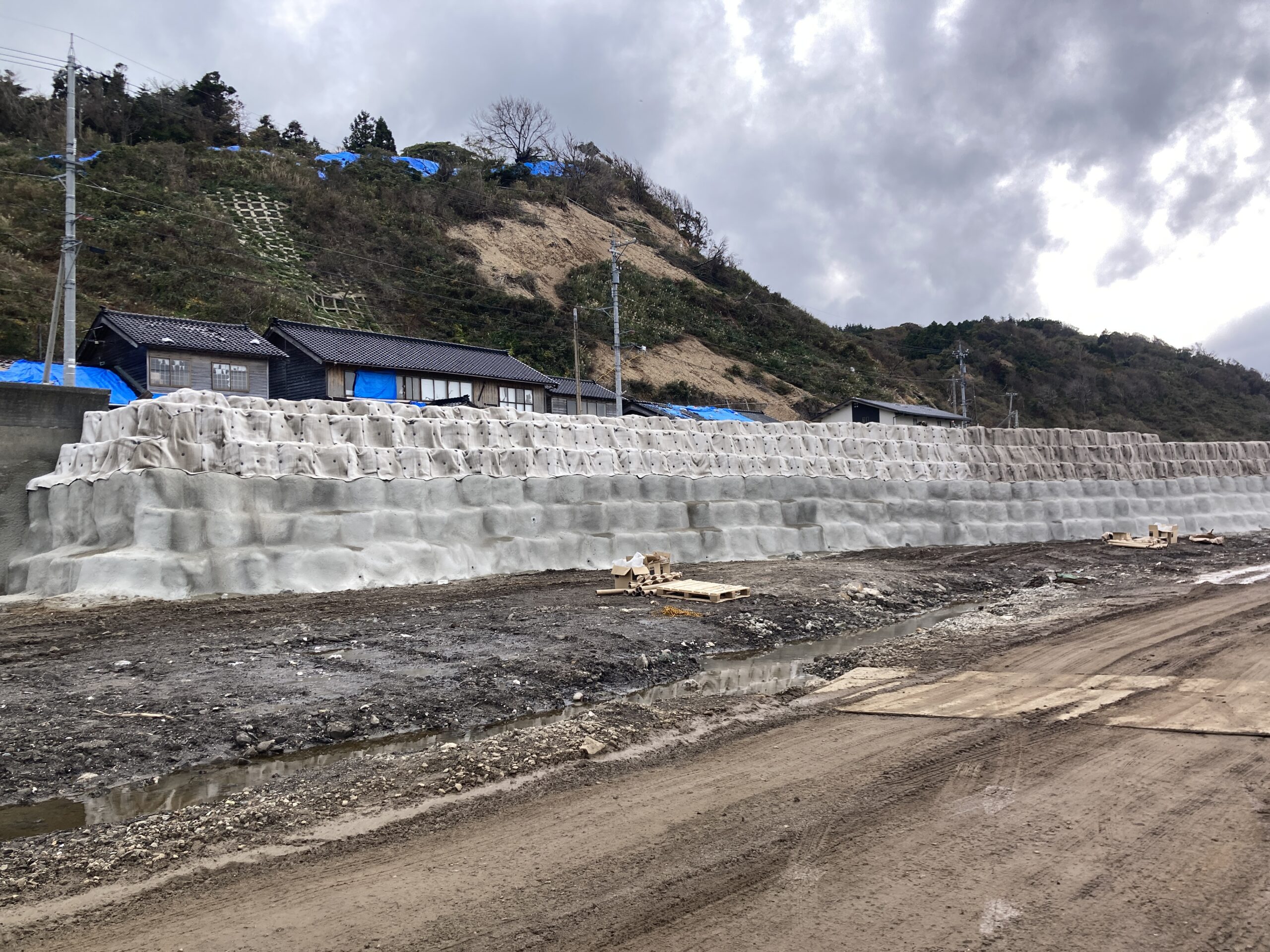
National Route 249 Restoration Project (Contracted by the Noto Reconstruction Office, Ministry of Land, Infrastructure, Transport and Tourism)
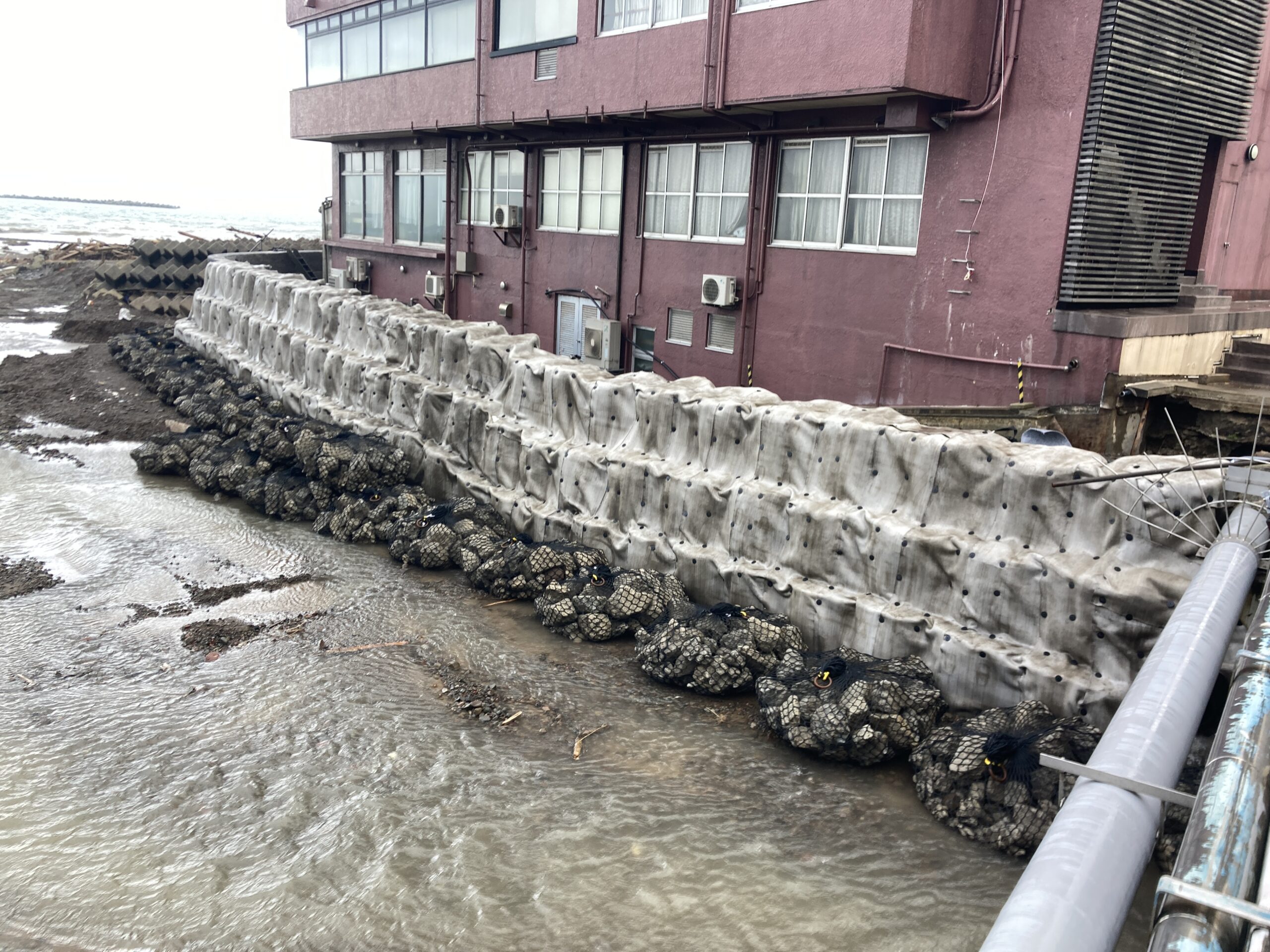
Tsukada River Restoration Project (Contracted by the Noto Reconstruction Office, Ministry of Land, Infrastructure, Transport and Tourism)
Outline of NETIS Registration
| Registration No. | CG-220009-VE |
| Technical Name | Concrete Canvas Method |
| Category | Recommended Technologies for Reiwa 8 |
| URL of the post | https://www.netis.mlit.go.jp/netis/pubsearch/details?regNo=CG-220009 |
Future Developments
Taking this selection of recommended technologies as an opportunity, our company will further promote the nationwide rollout of Concrete Canvas, while also expanding our sales efforts to government agencies and local governments and increasing its use in disaster response.
We will continue to work on the development and promotion of technologies that contribute to the maintenance and management of social infrastructure, as well as to disaster prevention and mitigation.
About Taiyo Kogyo Corporation
Taiyo Kogyo is a leading company in the field of large-scale membrane structures, with a history spanning over 100 years. At the 1970 Japan World Exposition, the company achieved a world first by constructing a low-rise (height-restricted) pneumatic membrane structure for the U.S. Pavilion, in which the roof was supported solely by air pressure.Since then, the company has participated in large-scale projects around the world, including the installation of the membrane roof at the Tokyo Dome and the Millennium Dome in London (now known as The O2 Arena), one of the world’s largest dome structures. Furthermore, for the 2025 Osaka-Kansai World Expo, the company was involved in the construction of more than 20 pavilions and facilities, playing a key role in the development of the Expo site.With membrane structure technology—which excels in cost-effectiveness, constructability, light transmission, and design—at the core of our operations, we have expanded our business into the fields of architecture, civil engineering, logistics, and the environment, thereby supporting safety and peace of mind in society.
Together with group companies such as TSP Taiyo Co., Ltd., which provides event consulting, and Actio Co., Ltd., which manages facility operations, we will continue to provide new value to society under the motto, “Soften the World. Warm the Future.”