

Renovation of the Shimizu-ga-oka Park Indoor Pool to a Membrane Roof
Renovate the existing glass roof into a membrane roof to extend its service life
2026.07.14
Taiyo Kogyo Co., Ltd. (Tokyo Headquarters: Setagaya-ku, Tokyo;Osaka Headquarters: Yodogawa Ward, Osaka City; President and CEO: Yuki Nomura), a company specializing in large-scale membrane structures (tent structures) as well as civil engineering and logistics materials, was responsible for the renovation of the existing glass roof to a membrane roof as part of the renovation work on the indoor pool at Shimizu-ga-oka Park (Yokohama City, Kanagawa Prefecture), which is scheduled to reopen on July 21, 2026.
In this project, to address the issue of rising indoor temperatures during the summer—a problem associated with the existing glass roof—we installed a membrane roof with high light transmittance and solar reflectance. This solution helps suppress the rise in indoor temperatures while maintaining brightness, thereby improving the user experience.
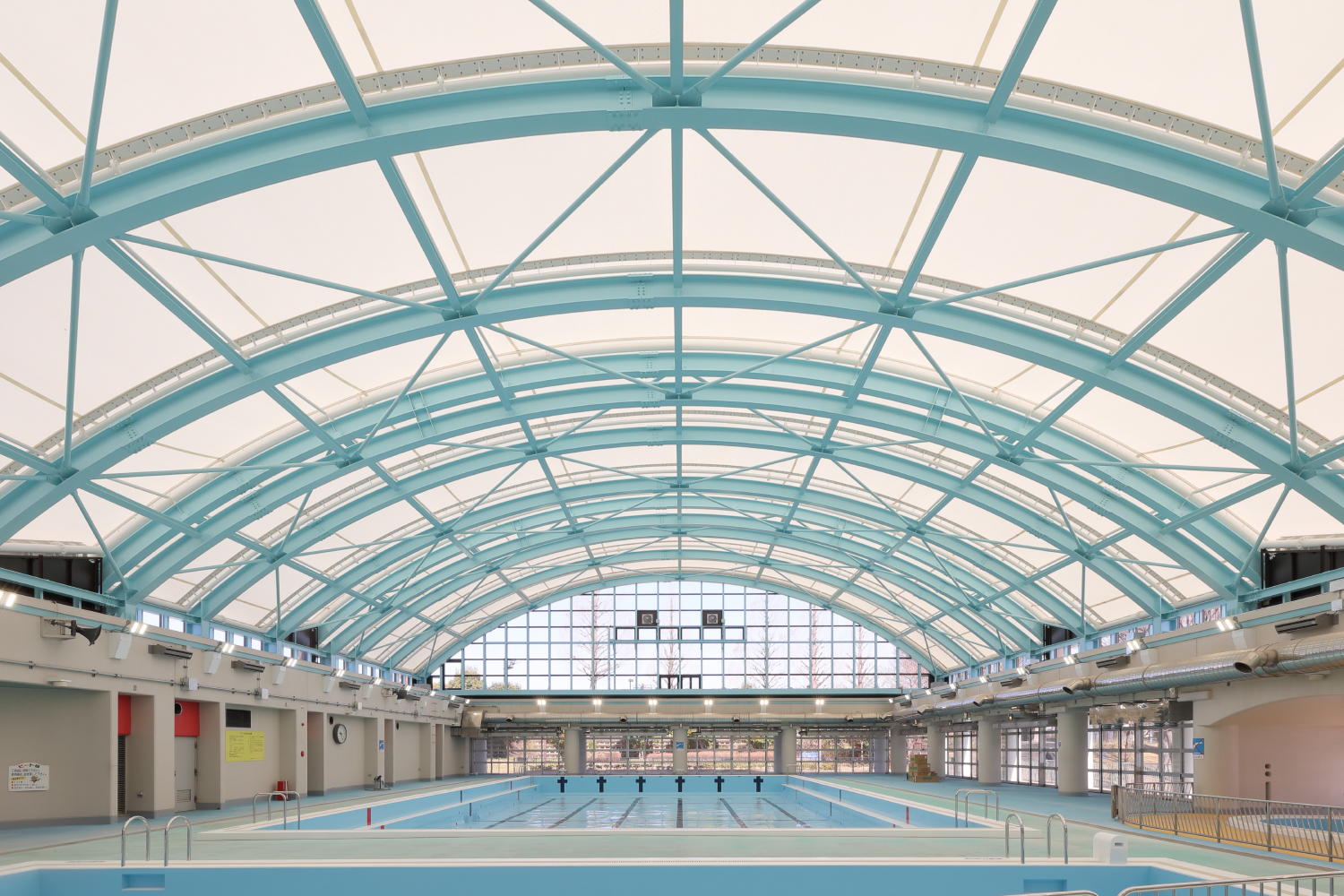
Shimizu-ga-oka Park Indoor Pool, featuring a membrane roof that lets in natural light and helps keep the indoor temperature from rising
Renovating from a glass roof to a membrane roof to curb the rise in indoor temperatures during the summer
The Shimizu-ga-oka Park Indoor Pool is a facility located within a sports park that was developed as part of the projects commemorating the 60th anniversary of Emperor Showa’s reign; it was characterized by a bright interior space created by its glass roof. However, during the summer, the indoor temperature tended to rise due to solar radiation, making it a challenge to maintain a comfortable environment for users.
Membrane roofs have a high solar reflectance rate; by efficiently reflecting solar energy—including heat— they suppress heat absorption into the building*1. As a result, they help limit indoor temperature rises during the summer, contributing to a comfortable environment for users and extending the facility’s operating period throughout the year.
Furthermore, the translucency of the white membrane allows natural light to enter, creating a bright and open space while reducing the need for artificial lighting during the day and helping to minimize maintenance burdens.
*1 Our website: Features of Membrane Structure Buildings https://www.taiyokogyo.co.jp/membrane_features/
Features of Lightweight, Flexible Membrane Materials
Membrane roofing materials are extremely lightweight compared to conventional roofing materials, reducing the load on the building structure.
Additionally, because they are flexible, they conform to the building’s movements during an earthquake, making them less likely to break and preventing debris from scattering. Since they are less likely to cause secondary damage from falling debris, they contribute to improved safety.
Durability Suitable for Pool Facilities
The membrane material is resistant to corrosion caused by chlorine and water vapor and offers the durability required for pool facilities.
The polytetrafluoroethylene (PTFE) membrane*2 adopted for this project also offers excellent stain resistance. Thanks to the titanium dioxide photocatalyst*3 applied to its surface, it breaks down organic contaminants, which are then washed away by rainwater, thereby maintaining its white appearance over the long term.
*2 Polytetrafluoroethylene (PTFE) coating membrane*2: This is a robust composite material consisting of fluororesin-coated glass fiber fabric, which was also used in the University of La Verne Sports Science & Athletics Pavilion (constructed in 1973 in California, USA)—the world’s first building with a permanent membrane structure.It has been in use for over 50 years.
*3 Titanium dioxide photocatalyst: It reacts with sunlight (ultraviolet rays) to oxidize and decompose organic matter. The decomposed dirt is washed away by rainwater, creating a self-cleaning effect.Furthermore, fluororesin-based titanium dioxide photocatalytic membrane materials contribute to air purification by decomposing and removing NOx (nitrogen oxides) and converting them into harmless ions.
Efficient Renovation Using Lightweight Membrane Materials
This project involved renovating the roof of an existing facility, which imposed restrictions on the use of large heavy machinery and the delivery of materials. Because the membrane is lightweight and easy to transport, we were able to carry out the renovation efficiently even under these conditions.
Preserving Design Aesthetics
This facility has long been cherished as a local landmark because, at night, light from inside shines through the glass and out into the surrounding area. The membrane roof also maintains the building’s distinctive design without compromising its traditional character, thanks to its ability to softly diffuse light.
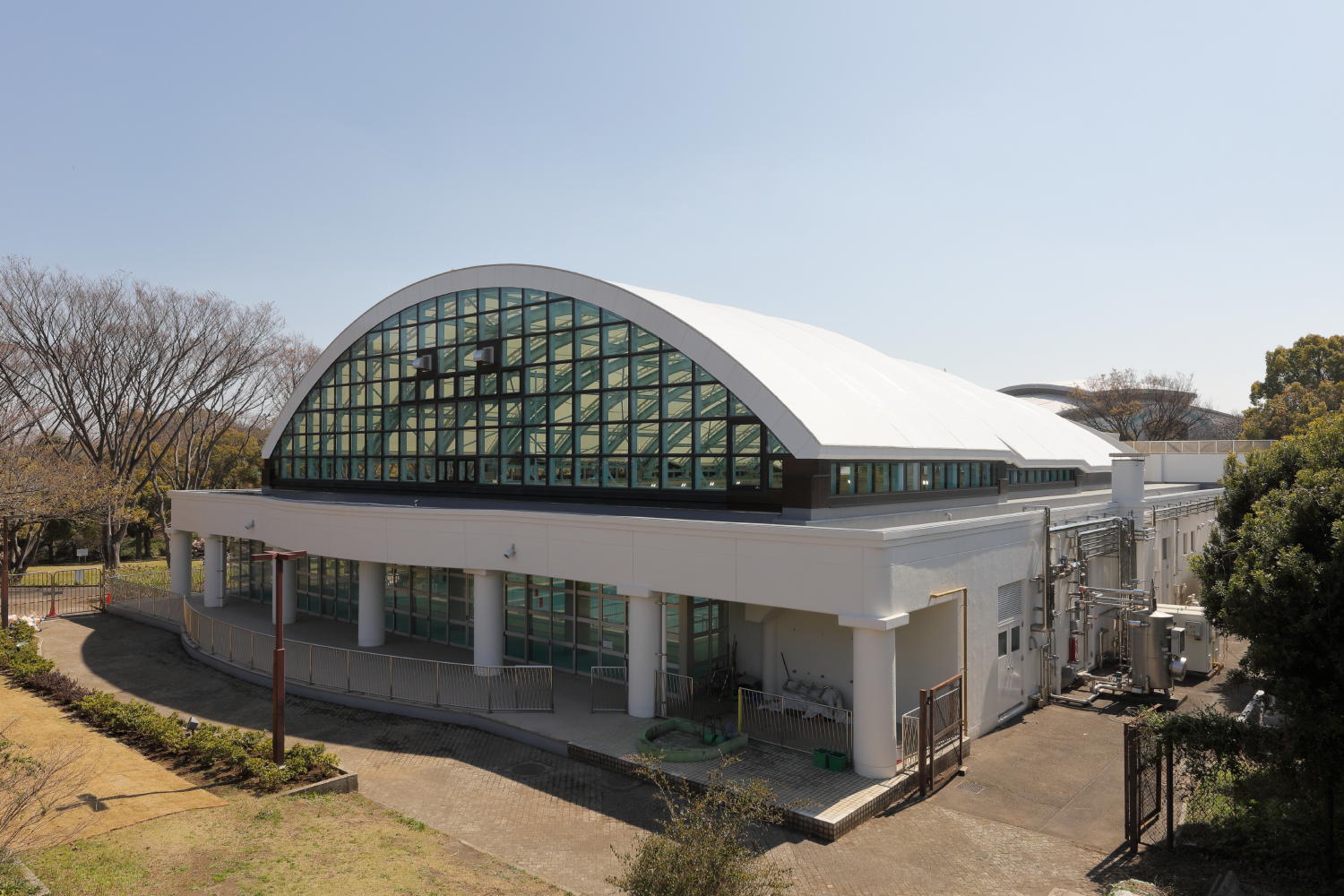
The appearance of the membrane roof, which is bright during the day and softly diffuses light at night
Shimizu-ga-oka Park Indoor Pool Overview
Address: 87-2 Shimizugaoka, Minami Ward, Yokohama City, Kanagawa Prefecture 232-0007
Facilities: General pool—25 m × 13 m, water depth 1.1–1.2 m
   Children's Pool: 13 m × 5.5 m, water depth 0.8–0.9 m
   Toddler Pool: Oval-shaped, 22 square meters, water depth 0.36 meters
Membrane Roof Overview
Client: Yokohama City Midori Environmental Bureau
Design: Kuni Sekkei Co., Ltd.
Construction: Kikushima Co., Ltd.
Membrane Construction: July 2025 – February 2026
Taiyo Kogyo’s Scope of Work: Manufacturing and installation of membranes and secondary steel framing
Membrane Material:AP450
Membrane surface area: 1,328 m²
About Taiyo Kogyo Corporation
Taiyo Kogyo is a leading company in the field of large-scale membrane structures, with a history spanning over 100 years. At the 1970 Japan World Exposition, the company achieved a world first by constructing a low-rise (height-restricted) pneumatic membrane structure for the U.S. Pavilion, in which the roof was supported solely by air pressure.Since then, the company has participated in large-scale projects around the world, including the installation of the membrane roof at the Tokyo Dome and the Millennium Dome in London (now known as The O2 Arena), one of the world’s largest dome structures. Furthermore, for the 2025 Osaka-Kansai World Expo, the company was involved in the construction of more than 20 pavilions and facilities, supporting the development of the Expo site.With membrane structure technology—which excels in cost-effectiveness, constructability, light transmission, and design—at the core of our business, we have expanded our operations from architectural projects such as sports and transportation facilities into the fields of civil engineering, logistics, disaster prevention, and the environment, thereby supporting safety and peace of mind in society.
Together with group companies such as TSP Taiyo Co., Ltd., which provides event consulting, and Actio Co., Ltd., which manages facility operations, we are committed to providing new value to society under the motto, “Making the world more flexible. Making the future warmer.”